
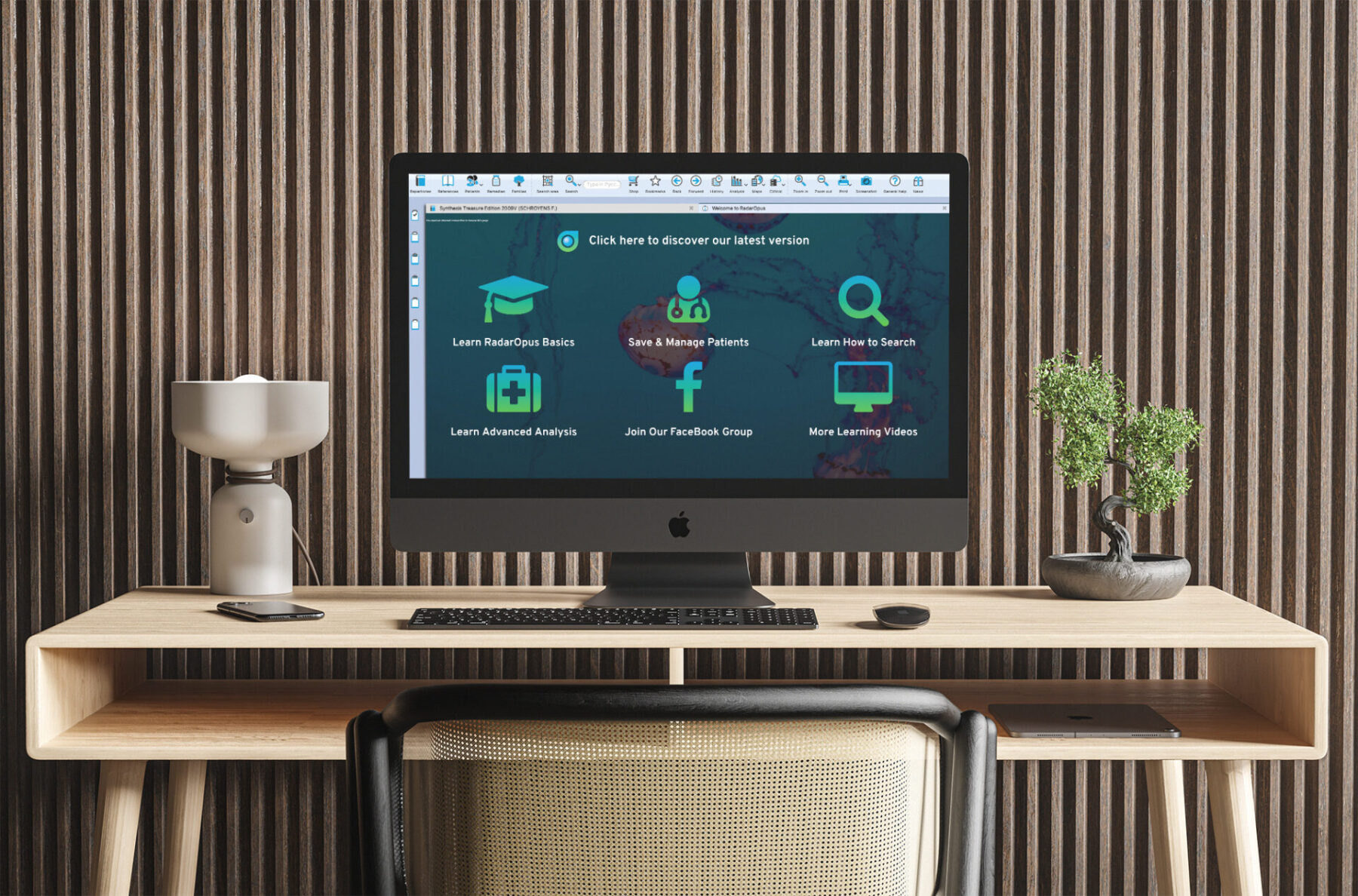
RadarOpus brings repertories, materia medica, search tools and case analysis into one desktop programme. Published by Zeus Soft, it is software I use in practice and teaching, and have helped to develop with colleagues across Europe and Hong Kong.

Working together

I began using RadarOpus in 2014. My entire life in homeopathy since then has been bound up with helping to craft the software, teaching people to use it and developing material for its library. The dedicated people I work with across Europe and Hong Kong have become a second family.

My own contributions include the Thematic Repertory and Synoptic Guide. With Zeus Soft, I also developed Homeopathic Philosophy Partner, an AI tool for reflective study.

From a question to its sources

RadarOpus lets you move between the repertory, materia medica and search results as you examine a case. You can search across the books in your library, compare remedies and bring material from different sources into an analysis.

For example, you can search for words within the same sentence or paragraph, then return to the passage to read its context. A result from materia medica can become a custom rubric – a repertory heading – alongside those selected from a repertory.

Specialist modules offer further approaches, including polarity analysis, remedy-family themes and graphical maps. The available books and tools depend on your package and additions.

Next pages

Teaching the software

At Radar UK, I help students and practitioners choose software suited to their work and teach them how to use it. I run live question-and-answer sessions where people can bring the questions that arise in practice and study.

Explore RadarOpus on my Radar UK website.